
December 2, 2025·4 min read
Stump Grinding vs Full Excavation
Planning a patio, fence, or driveway where a tree stood. See when stump grinding is enough and when full excavation prevents sink spots and future failures.
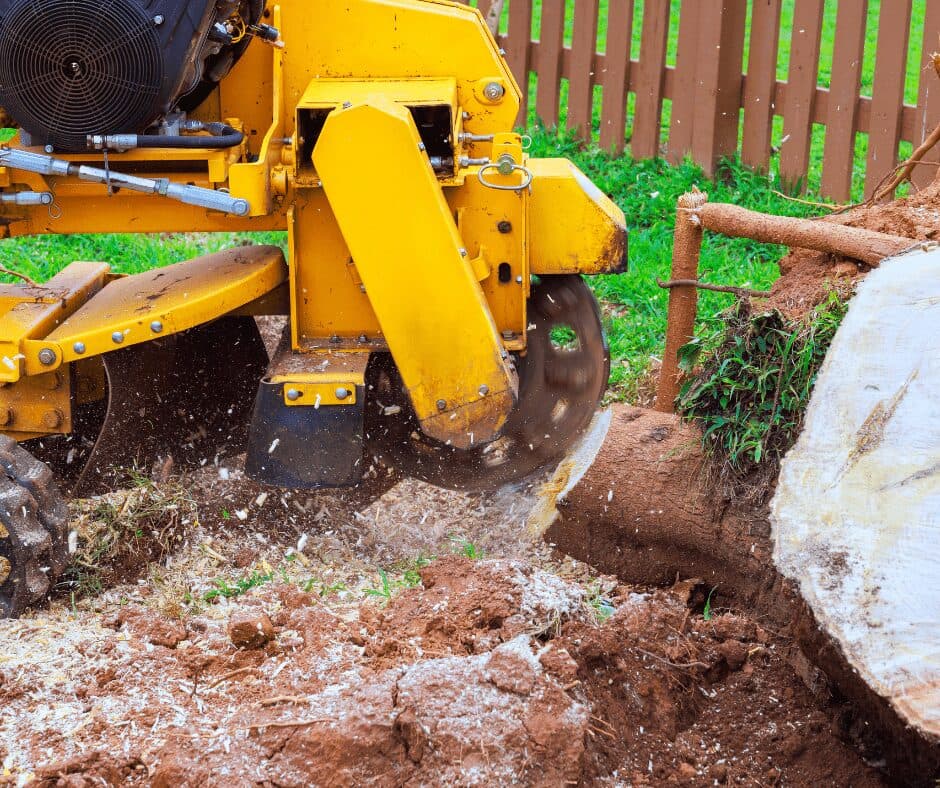
If you plan to build a patio, fence, walkway, or driveway where a tree stood, the way you remove the stump will decide how stable that project feels in five years. Both methods work, but they are not interchangeable. Use this guide to match the method to your next hardscape.
Quick answer
- Choose stump grinding for lawns, planting beds, light foot traffic paths, and most fence lines. It is faster, cleaner on the yard, and costs less once you include restoration.
- Choose full excavation when you need a uniform, compactable base for a structural slab, heavy vehicle traffic, footings near the trunk, or when the stump sits inside the future patio footprint with limited base depth.
What stump grinding really removes
Grinding turns the stump and main surface roots to chips 6 to 10 inches below grade for lawn repair, or 12 to 18 inches when you plan a fence line or a small garden wall. The void is then backfilled with clean soil or base material. Major deep roots can remain outside the grind zone, which is fine under turf but can leave organic pockets if you pour a slab directly above without proper base prep.
Best fits: lawn repair, mulch beds, replanting small shrubs, paver walkways with a deeper rebase, and most fences when the post is offset from the stump center.
What full excavation actually does
Excavation removes the stump and a larger halo of roots along with the attached soil. The hole is backfilled in lifts with compactable material and tested or proof rolled. This creates a uniform, non organic base that will not settle as wood decays.
Best fits: patios and driveways where the stump sits in the middle of the new base, monolithic slabs, hot tubs, retaining walls, and any footing that will land inside the old root plate.
How each method affects common projects
Paver patio
- Grinding works if you over excavate the patio base by an extra 6 to 12 inches in the stump area, remove chips, and rebuild with compacted dense base.
- Excavation is smarter when the stump is large and centered in the patio. You get uniform density with less guesswork.
Concrete slab or hot tub pad
- Go excavation. Concrete over organics invites settlement and cracks.
Asphalt or gravel driveway apron
- Either works. If you grind, remove all chips and rebuild with compacted gravel to full depth. Excavation is preferred for heavy vehicles.
Fence line
- Grinding to 12 to 18 inches lets you set posts next to the old center and keep line and grade.
- Excavation only if a post must occupy the exact stump center or if large roots block multiple post holes.
Retaining wall or footings
- Excavation. Footings need undisturbed or properly compacted soil with no organics.
Sink spots, compaction, and soil health
- Grinding with chip removal and clean backfill gives stable turf and light-use surfaces. Always remove chips where hardscape will go. Chips hold air and water, then decay and settle.
- Excavation with lift compaction gives the most predictable base for slabs and walls. Ask for compacted lifts and, if available, a simple density check or proof roll.
Timeline, access, and lawn impact
- Grinding: 30 minutes to 2 hours per stump. Fits standard gates. Minimal ruts with turf mats. Same day backfill and seed.
- Excavation: longer setup, larger equipment, and more soil to haul. Plan for bigger work zones and restoration after backfill.
Cost signals
- Grinding is usually the lower cost choice and the fastest path back to usable ground.
- Excavation costs more due to machine time, hauling, larger backfill volume, and compaction, but it can save money later by preventing slab or paver failure.
Utilities and risk control
Call 811 for locates before either method. Grinding allows careful depth control around marked lines. Excavation near utilities needs added care and sometimes hand digging.
When a hybrid approach wins
Grind the stump to remove bulk, then over excavate only inside the hardscape footprint to reach clean, compactable subgrade. This keeps yard damage low and gives you a uniform base where it matters.
Simple decision checklist
- Is a slab, hot tub, or retaining wall planned here
- Will vehicles park or turn on the surface
- Is the stump centered in the new footprint
- Do you need fence posts exactly where the trunk sat
- Can you over excavate and rebase the area if you grind
If you answered yes to the first three, favor excavation. If not, grinding with proper chip removal and base rebuild is usually the right call.
Pick stump grinding for lawns, beds, walkways, and most fence lines, and be strict about chip removal and base rebuild where any hardscape will sit. Choose full excavation when you need a guaranteed, uniform base for patios, driveways, slabs, hot tubs, and footings. If the stump sits inside the future footprint, excavation pays for itself by preventing settlement and cracks. If you want a site specific call, share a sketch of the planned hardscape and a few photos, and we will mark the grind or excavation limits so your new surface stays flat for the long haul.
Need a hand with this?
Call for a free, no-obligation quote from Mansfield Tree Service Pros.
Ready to take care of your trees?
Call today for a free quote, or send us your project details and we'll get right back to you.